Exterior wall framing plays a big role in how your home is built—and can vary based on climate, budget, builder preference, and even local building codes. Terms like 2x4 framing, CMU, and ICF refer to different structural systems, each with its own advantages. Depending on where you're building, some options may be more common, or even required, while others can be chosen for energy performance or personal preference.
Most house plans come with a default wall framing type, but that doesn't mean it's your only option. In many cases, you can adjust the plan to suit your needs. Below, we’ll walk through some of the most common exterior framing types, where they’re used, and why one might be a better fit for your build than another.
Types of Exterior Wall Framing in House Plans
Let’s take a closer look at the framing types you're most likely to come across when selecting a house plan and what sets each one apart.
2x4 Wood Framing
This is the most widely used wall framing type in residential construction across many parts of the country. It’s affordable, easy to build with, and commonly found in areas with moderate climate conditions. Most standard house plans are drawn with 2x4 exterior walls unless noted otherwise.
Why it’s used: Cost-effective and familiar to many builders. Materials are readily available.
Keep in mind: May require additional insulation to meet local energy codes, depending on your region.
2x6 Wood Framing
With deeper wall cavities, 2x6 framing allows for more insulation—making it a popular upgrade in regions that prioritize higher energy performance.
Why it’s used: Better thermal performance, improved energy efficiency, and sturdier walls.
Keep in mind: Slightly higher material and labor costs. May reduce interior square footage slightly due to thicker walls.
2x8 Wood Framing
Less common in standard residential builds but sometimes chosen for added strength or high insulation needs.
Why it’s used: Stronger walls, more insulation space, and deeper window wells.
Keep in mind: More expensive and heavier to work with than 2x4 or 2x6 framing.
CMU (Concrete Block) in House Plans
Block construction is often used in areas where homes need added strength and resistance to moisture, pests, and extreme weather.
Why it’s used: Durable, moisture- and pest-resistant, and sometimes required by local building practices.
Keep in mind: May cost more and take longer to build. Requires experienced masons and specific tools.
ICF (Insulated Concrete Forms) Framing Systems
ICF walls use foam forms filled with reinforced concrete. They offer excellent insulation, soundproofing, and strength—making them a great option for high-performance homes.
Why it’s used: Superior energy performance, noise control, and durability.
Keep in mind: Higher upfront cost. Not all builders work with ICF, so contractor experience is important.
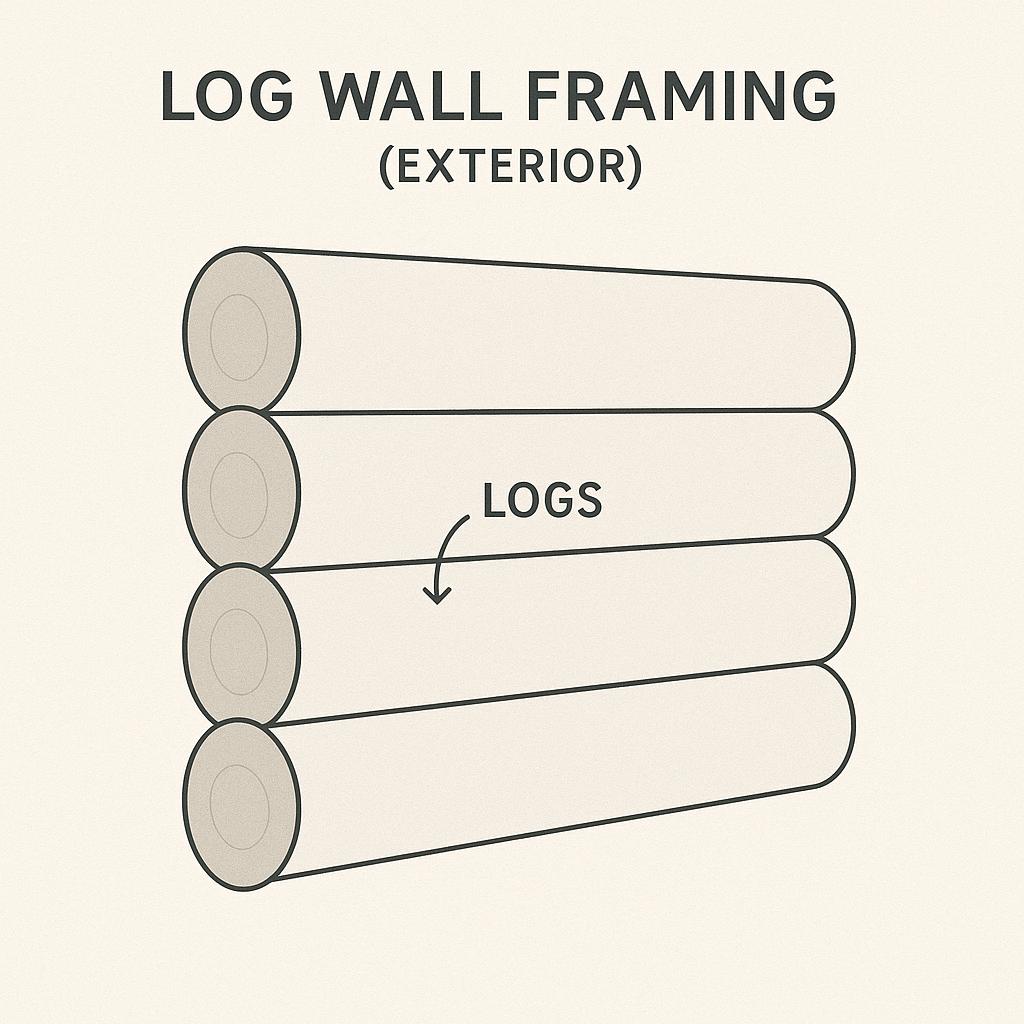
Log Wall Framing for Rustic House Plans
Log homes offer a distinct look and are often chosen for scenic or rural settings. The logs provide both structure and insulation.
Why it’s used: Natural materials, rustic aesthetic, and thermal mass.
Keep in mind: Requires regular maintenance. Local code requirements and insurance considerations can vary.
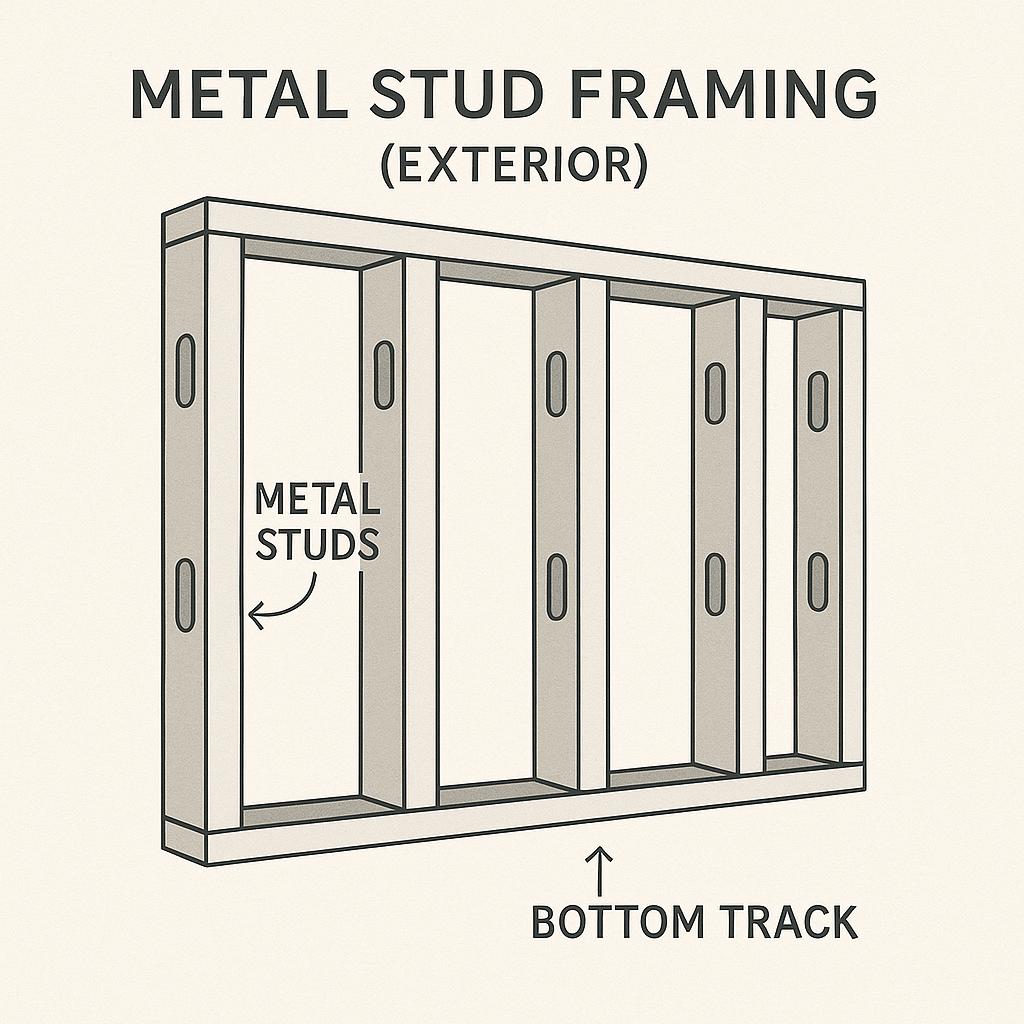
Metal Framing in Residential House Plans
Steel-framed homes are less common in residential construction but are gaining popularity for their strength and resistance to pests, rot, and fire.
Why it’s used: Straight, strong, and non-combustible. Sometimes preferred in areas concerned with moisture or wildfire risk.
Keep in mind: Requires different tools and techniques than wood framing. May need added insulation depending on climate.
Choosing the Right House Plan Framing for Your Build
The right wall framing choice depends on your location, climate, builder, and long-term goals. Whether you’re aiming for energy efficiency, weather resilience, or a specific look, we’re here to help you
find a house plan from our curated portfolio of over 25,000 homes.
Need help modifying the framing options on a house plan? Contact us by chat, email, or phone. Our team is here to guide you through your options and help you move forward with confidence.
FAQ: Exterior Wall Framing Options for House Plans
Can I change the framing type on a house plan?
Yes. Many house plans on Architectural Designs offer alternate exterior framing options available for purchase. If a plan doesn’t list the option you’re looking for, you can request a modification quote.
How can I find out how different framing options affect the total cost of my build?
You can purchase a Cost to Build Report for any of our house plans to get a breakdown of estimated construction costs in your area. This report can help you compare how changes—like upgrading from 2x4 to 2x6 walls or switching to concrete block—might impact your overall budget.
What’s the difference between 2x4 and 2x6 framing?
2x6 framing uses deeper studs, which allows for more insulation. It’s often used in colder regions or in homes aiming for higher energy efficiency. While 2x6 walls can slightly reduce interior square footage, they offer better thermal performance than 2x4 walls.
Is concrete block construction better than wood framing?
It depends on your location and goals. Concrete block (CMU) offers excellent durability and resistance to pests and moisture, which makes it a popular choice in humid or storm-prone areas. Wood framing, on the other hand, is typically faster to build with and more widely used in residential construction.
What is ICF wall framing?
ICF stands for Insulated Concrete Forms. These systems use foam panels that are stacked like blocks and filled with concrete, creating strong, energy-efficient walls. ICF framing can provide excellent insulation and soundproofing, but it may cost more upfront and require a builder familiar with the system.
Do I need to choose a framing type before purchasing a house plan?
It’s always a good idea to
talk with your builder before placing your order. They can help confirm which exterior wall framing type is right for your location, build timeline, and budget. While many house plans include alternate framing options or can be modified after purchase, choosing the right option up front is the best way to avoid delays or added costs. Our team is happy to help you understand what’s available so you can move forward with confidence.